
Everyone has just been thrown off track and your normal life comes to an immediate halt. COVID-19 has caused nationwide panic and a lock-down has just been put in place as a necessary precaution to slow the spread.
You want to keep up with important news, but social media and top news negatively affect your mental health. Your sense of time begins to distort. What do you do now?
We began by watching behavior and posts made on popular social media sites such as reddit and Facebook in an attempt to find patterns and trends to focus on. We found an increase in mental health support groups on Facebook and a general trend of decreasing mental health, especially in places such as r/Mental_Health and r/COVID19 on reddit. We wondered if the lack of outdoors and exercise could potentially be a cause of this and decided to further our research there.
Due to the novel coronavirus, we had to conduct all questionnaires and interviews remotely. We sent out a Google form questionnaire questioning if there was a shift in one's day-to-day lifestyle, how often they leave their house, their exercise routines, and about their general mental health. A week after sending it out, we got a total of 35 responses ranging from college student age (19-27 years old).
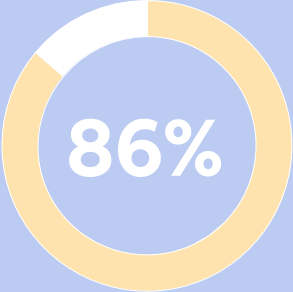
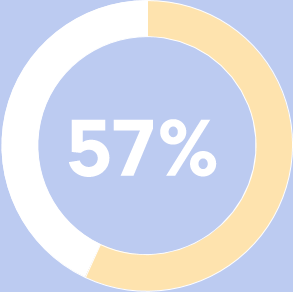
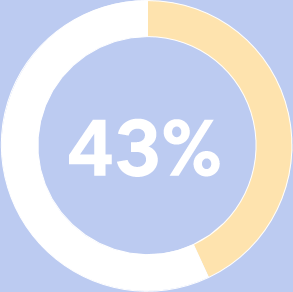
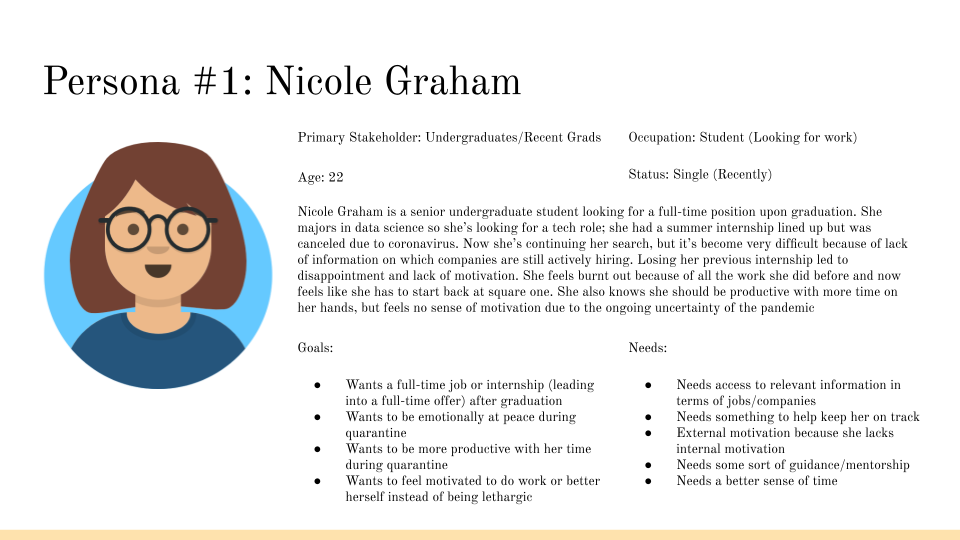
When giving more context, many respondents explained that they felt overwhelmed and stressed due to the uncertainty of the future, causing less productivity and motivation. We inferred that there was a cycle revolving around the idea that due to the decrease in mental health, people would become unproductive, causing decline in their mental health.
.png)
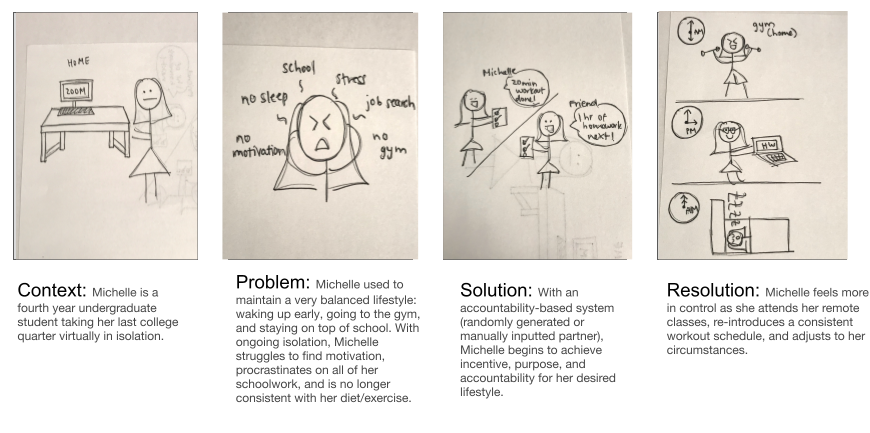
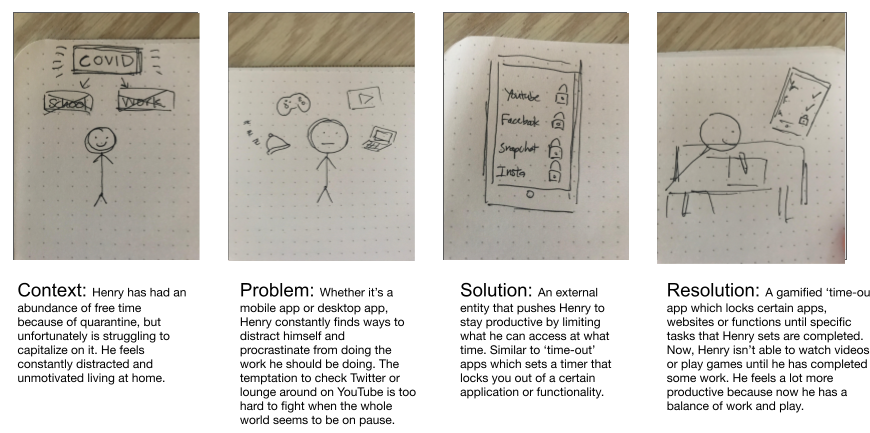
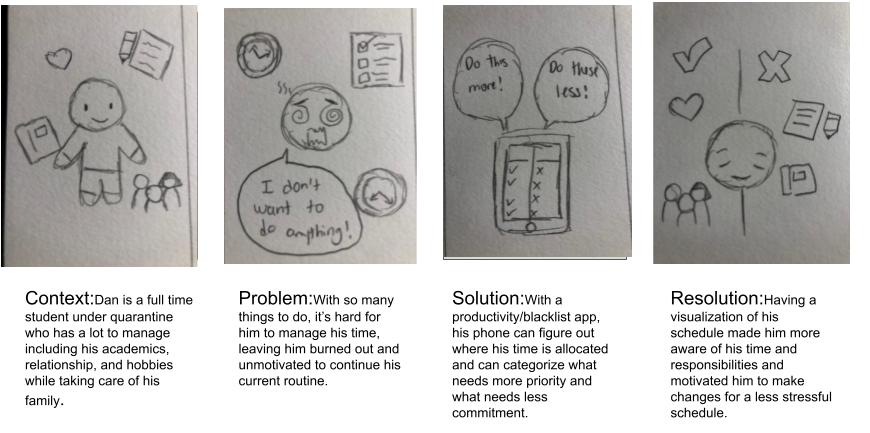
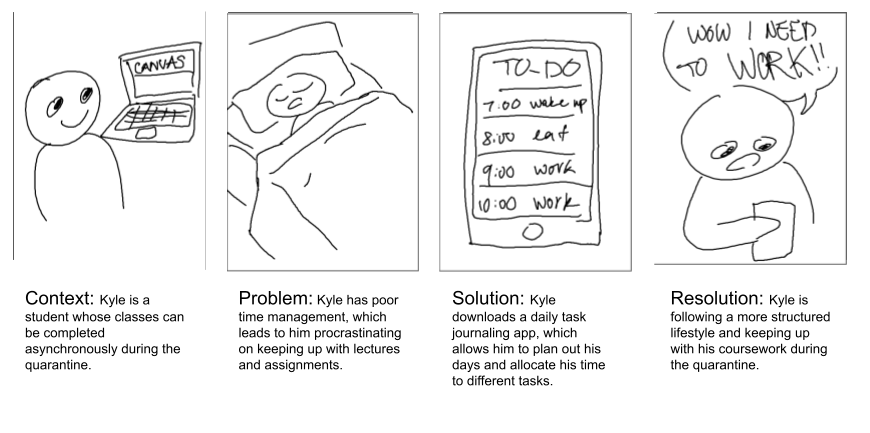
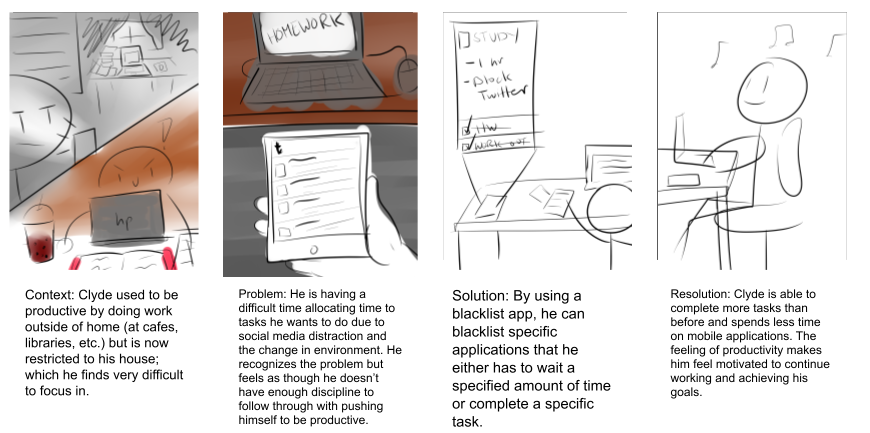
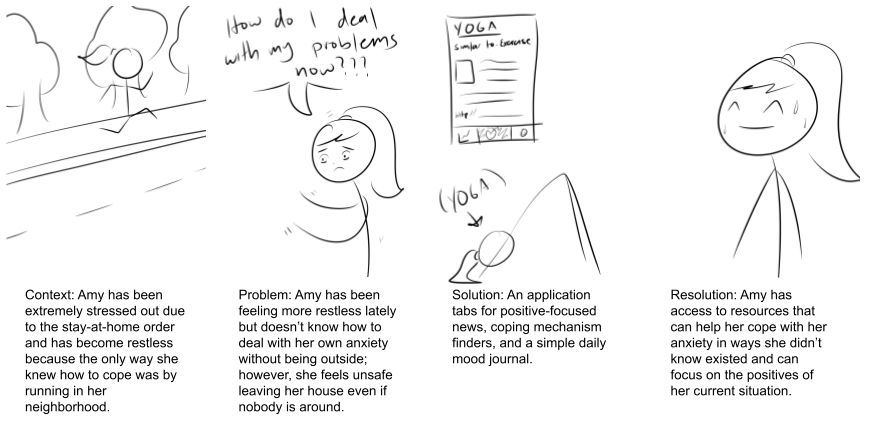
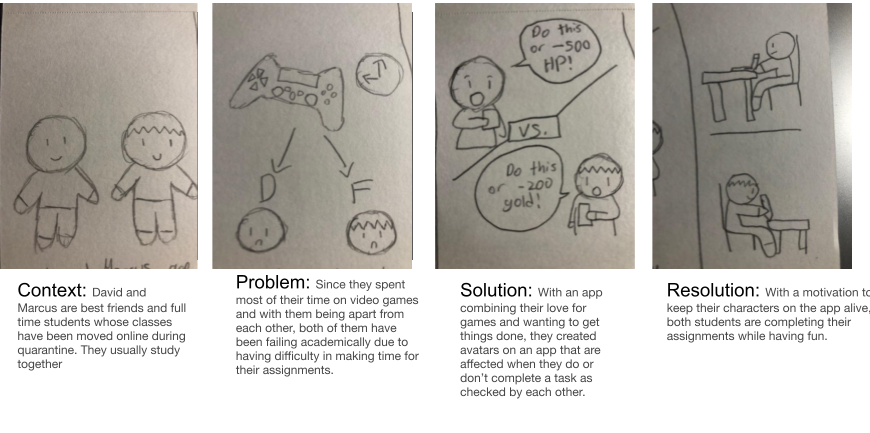
A majority of our storyboards were based on productivity, and each were met with some kind of challenge when receiving feedback from our interviewees. Storyboard 6 shifts our focus from productivity to mental health, changing our "how might we statement" from "How might we provide a resource for students to regulate and/or maintain a structured and healthy routine to promote a sense of control, productivity, and purpose?" to "How might we provide coping mechanisms to people experiencing increased anxiety?".
A majority of the interviewees felt that the productivity focused storyboards were lackluster.
We received the best feedback regarding Storyboard 6 from all 6 interviewees. This moment caused a pivot in our course of action from designing another productivity app and creating a community and app centered on mental health and positivity.
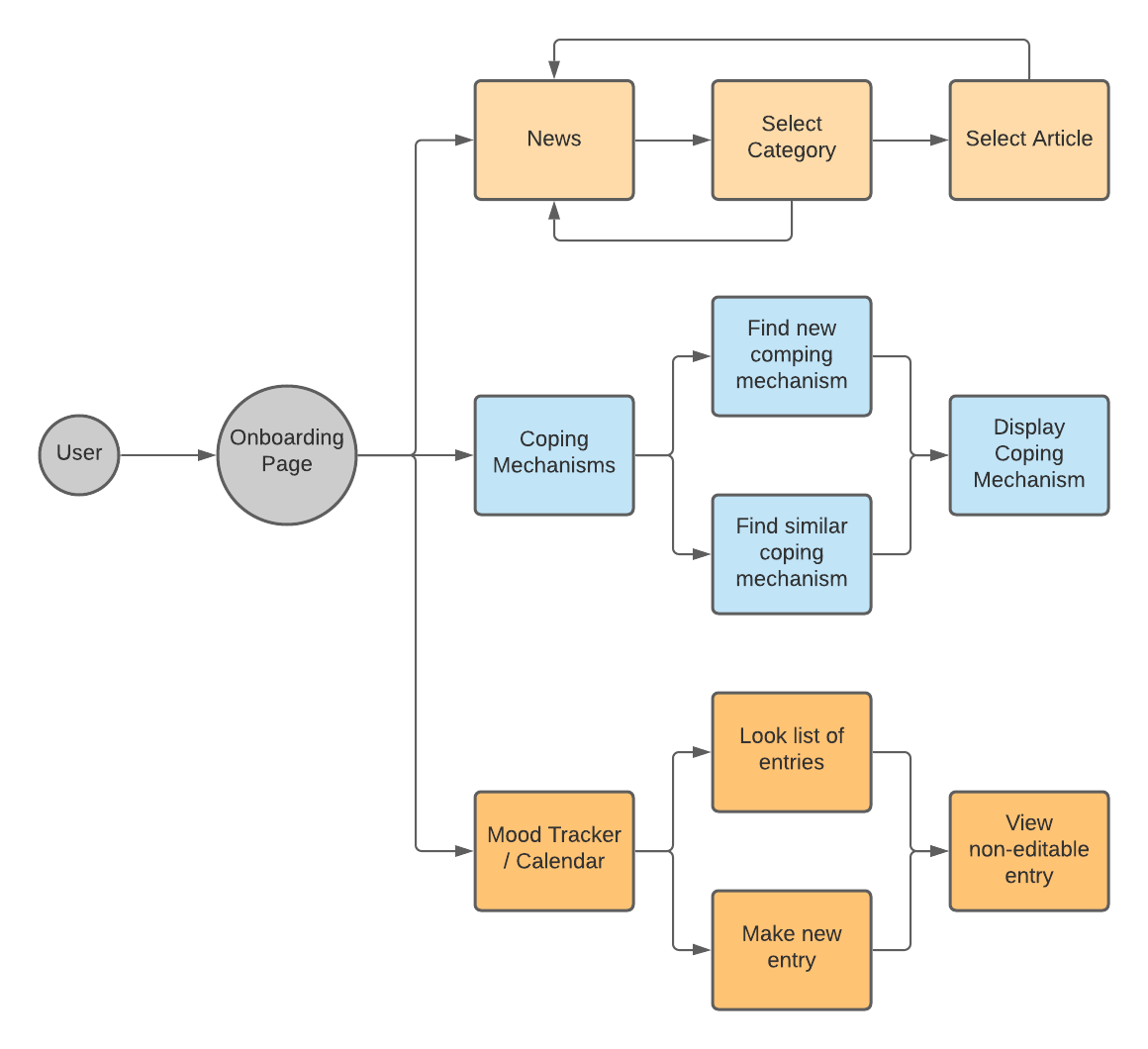
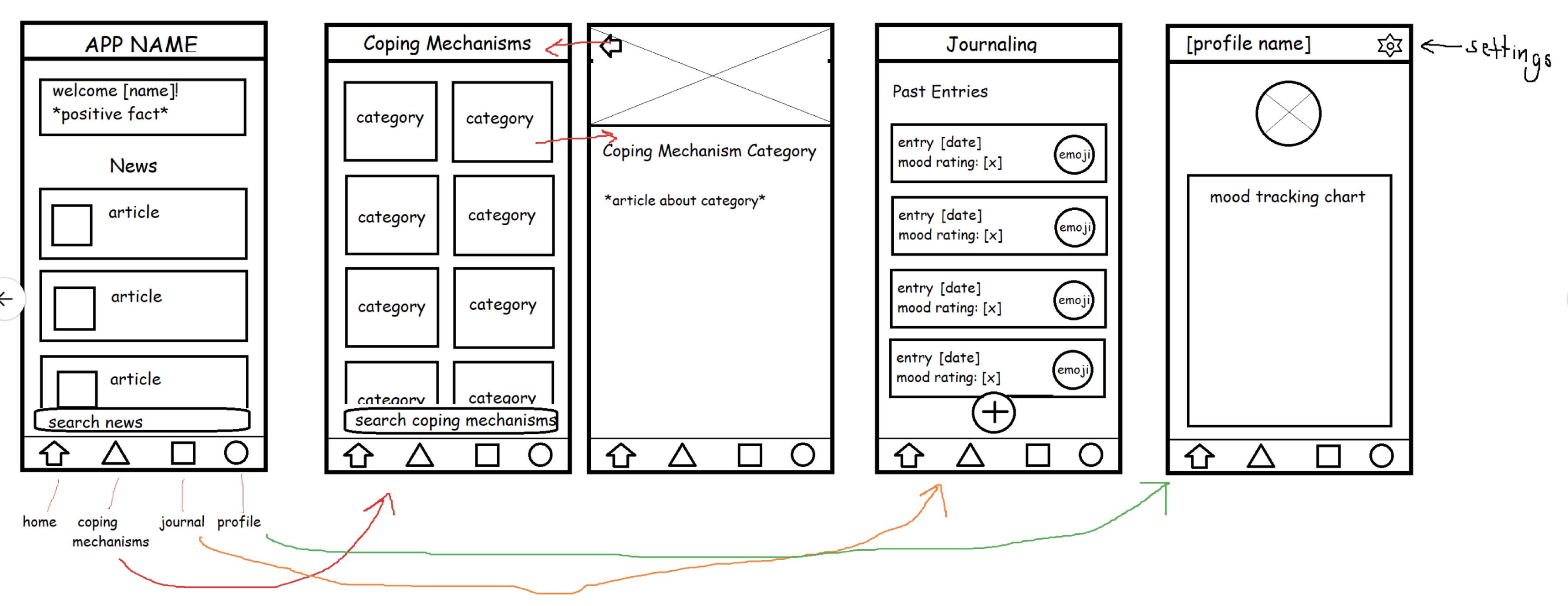
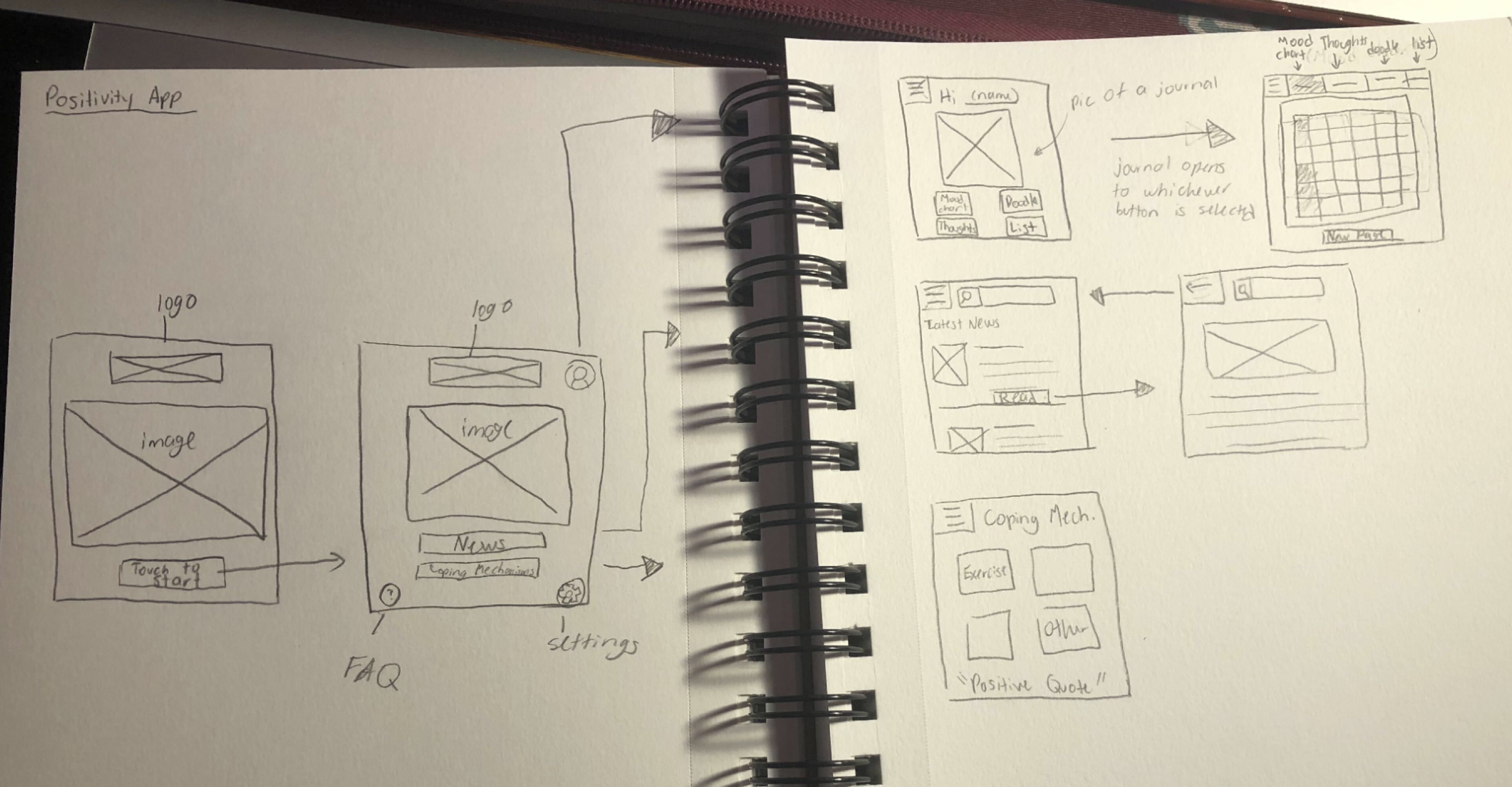
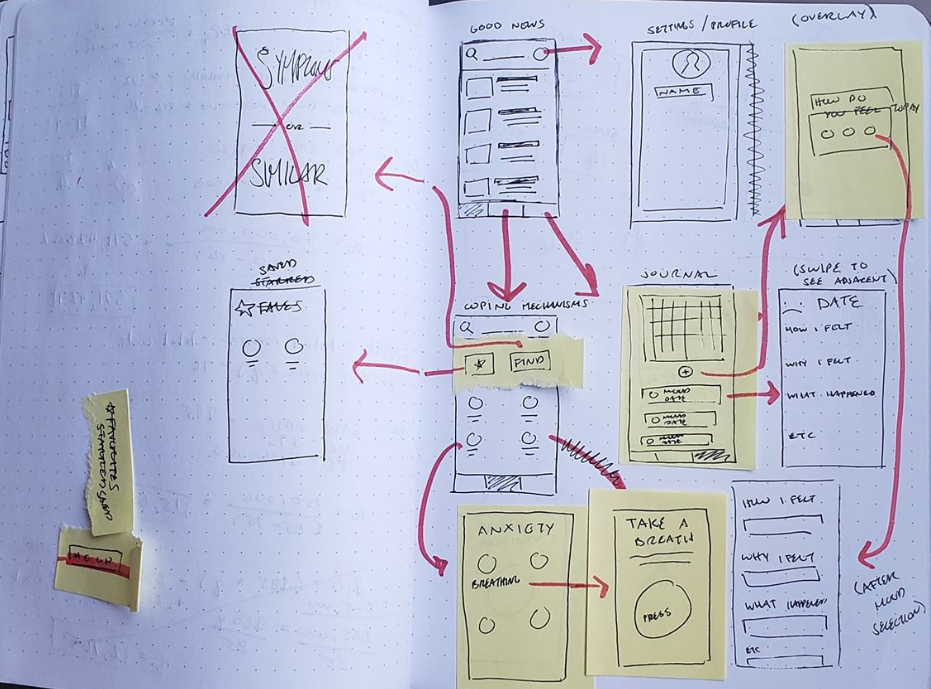
.png)
We began doing our user testing with our low-fidelity prototype using this questionnaire.
During user testing, most people had little to no trouble performing the assigned tasks and said that the app was fairly easy to use. However, there was some confusion in terms of labeling, and users desired more functions to improve the app (such as direct messaging and bookmarking features).
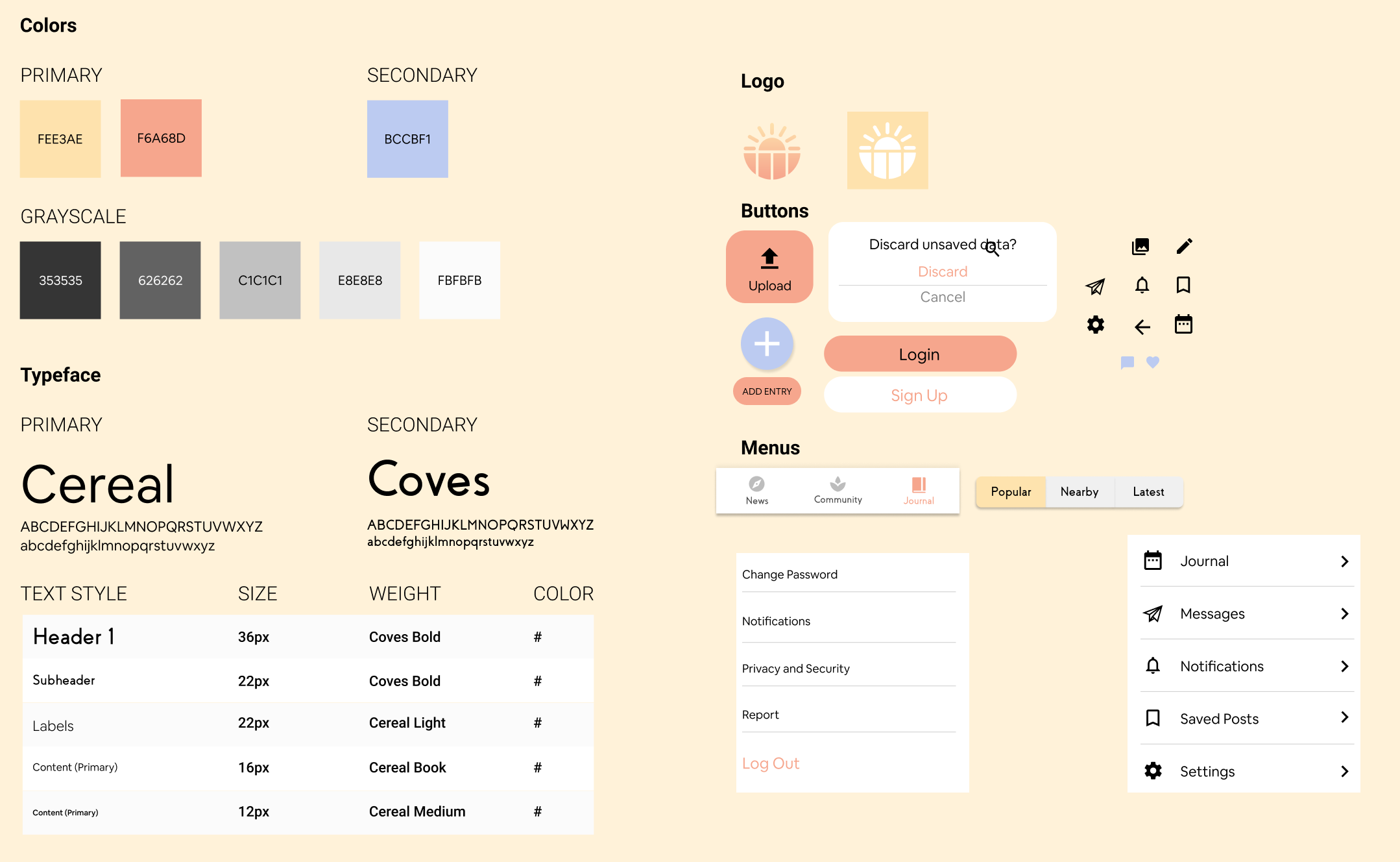
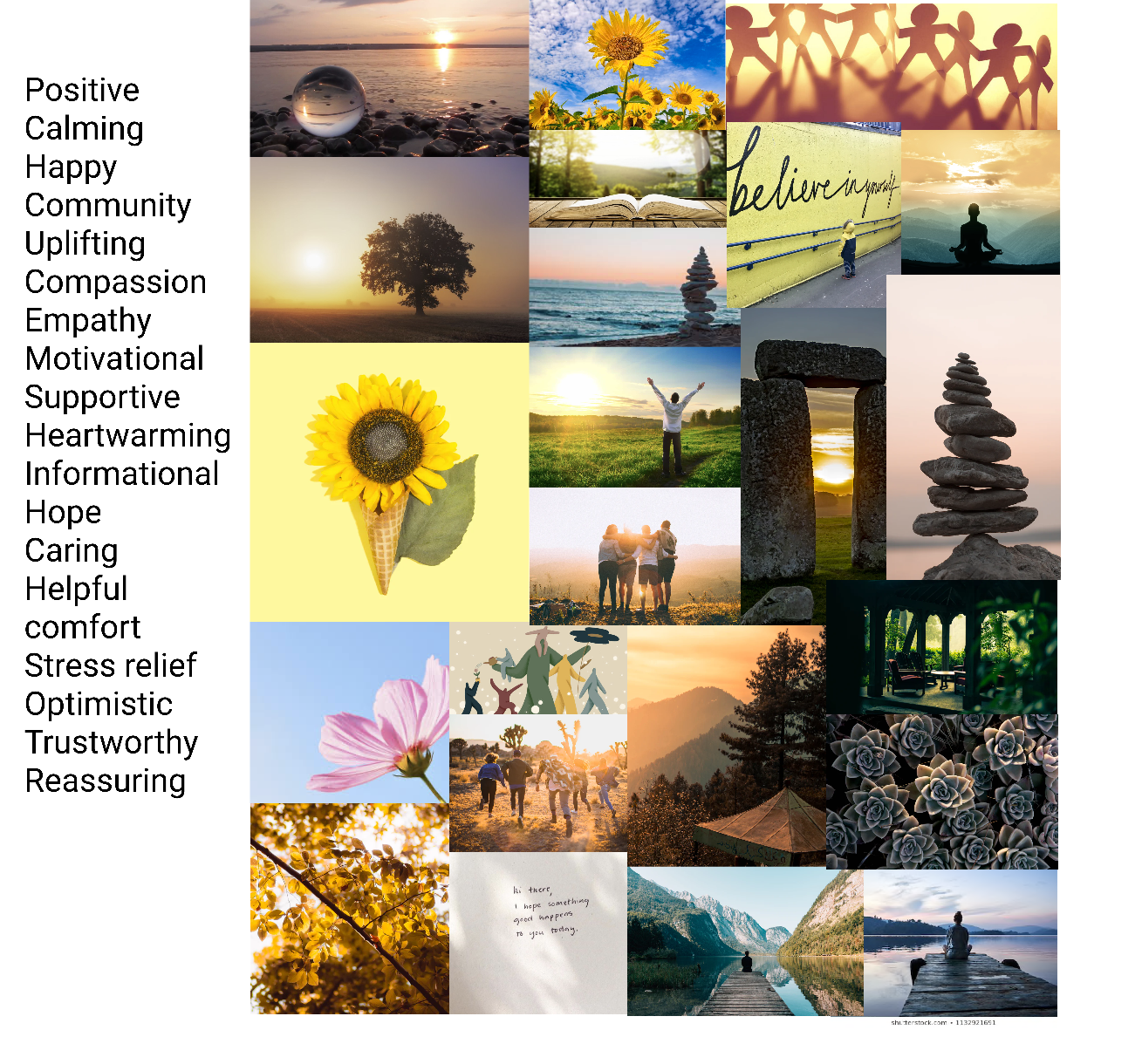
While working on our hi-fi prototype we did a second run of user-testing using this questionnaire.
For our hi-fi prototype, we were able to conduct 6 user interviews. Similar to our lo-fi user testing guidelines, we had our interviewees interact with our prototype through a set of tasks followed by a list of post-interview reflection questions.
There was still some confusion regarding labels, and we realized the new Direct Messaging system needed to be more obvious.
A positive forum for uplifting news and a sense of community